Upgrade the Mind.
Expand the Possible.
Explore how quantum computing, artificial intelligence, psychology, neuroscience and consciousness research can help humanity understand itself — and build a better future.
Five fields. One convergence.
Quantum Self lives where credible science meets self-discovery: real quantum education, responsible AI literacy, behavioral psychology, consciousness exploration and practical human betterment — combined into articles, learning paths, tools and games.
We keep claims honest. Everything on this site carries a label — Science Emerging Research Interpretation Future Scenario — so you always know when we're reporting evidence and when we're exploring an idea.
Five paths into the platform
Quantum Explorer
Learn quantum physics and computing from the very beginning — qubits, superposition, entanglement, algorithms and real limitations.
ScienceAI Collaborator
Understand AI agents, automation, ethics and how to build a healthy, productive human–AI partnership.
ScienceMind Architect
Improve habits, focus, resilience, emotional intelligence and decision-making with evidence-based psychology.
InterpretationConsciousness Investigator
Explore awareness, identity, meditation, perception and the philosophy of mind — with speculation clearly labeled.
Future ScenarioFuture Human
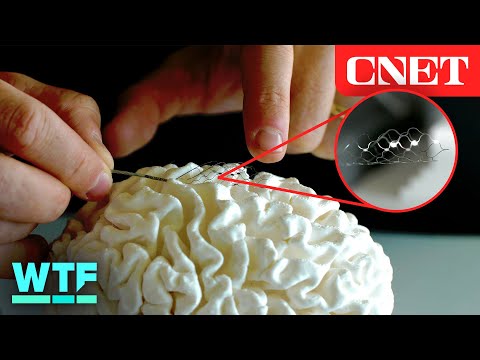
Investigate neurotechnology, longevity, brain–computer interfaces, digital twins and human augmentation.
Personal PracticeNot sure where to start?
Take the 5-minute Quantum Self Assessment and get a recommended path, articles and one practical challenge.
Cornerstone reading
Your Brain Is Software
A practical metaphor for change: if thought patterns behave like programs, what does responsible debugging look like?
ScienceQuantum Computing Explained Without the Hype
What quantum computers can actually do today, what they might do, and what they will never do.
InterpretationThe Observer Effect: Science vs. Metaphor
What measurement really means in quantum mechanics — and where the popular "consciousness collapses reality" story goes wrong.
Emerging ResearchAI as a Cognitive Mirror
How large language models can surface your patterns, biases and blind spots — and the dependency risks to avoid.
ScienceCognitive Biases That Shape Your Reality
Confirmation bias, anchoring, availability, loss aversion — the predictable glitches in human judgment, and countermeasures.
Future ScenarioThe Future of Brain–Computer Interfaces
Where neural interfaces stand today, credible near-term applications, and the ethical questions arriving with them.
Classical bit vs. qubit
A classical bit is always 0 or 1. A qubit can occupy a superposition of both — until it is measured. Toggle the states below.
Try it: set the qubit state
Measurement forces the qubit to a definite outcome, with probabilities set by its amplitudes. Quantum algorithms choreograph superposition and interference so that wrong answers cancel and right answers amplify.
|0⟩ — a definite classical state
Ten modules of the mind
Interpretation A practical metaphor — not a literal description of the brain. Click a module to see what it controls, what commonly breaks, and one exercise to try today.
- What it controls
- Common problems
- Relevant psychology
- AI-assisted idea
- Try this
Quantum Self: Consciousness Ascension
Progress through seven chakra-inspired learning worlds by completing psychology questions, quantum challenges, AI-ethics decisions, focus exercises and human-vs-AI arcade battles. Earn wisdom points, quantum energy and learning streaks.
Responsible research briefings
Summaries of credible work in quantum technology, AI, neuroscience and psychology — with evidence levels and limitations stated up front.
Logical qubits pass a key threshold
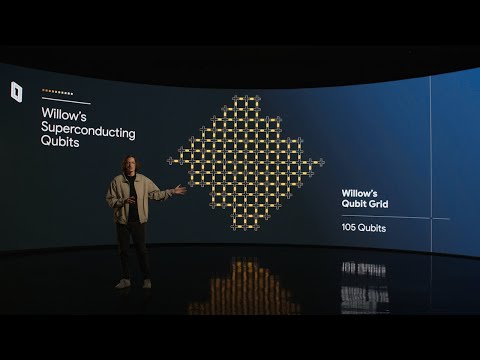
Error-corrected logical qubits are beginning to outperform their best physical components — the milestone fault-tolerant computing depends on.
Emerging ResearchLLMs as reflective journaling aids
Early studies suggest AI-assisted structured reflection can support self-awareness — with real caveats about dependency and privacy.
Emerging ResearchMapping attention in the wild
Wearable EEG and phone-use studies are quantifying how notification patterns fragment sustained attention across a day.
Latest related thinking
Continue with recent Quantum Self essays connected to this topic.

Grokbot vs. Hermes Agent vs. OpenClaw: The New Race to Build Your AI Workforce
Read the full article on the main Quantum Self blog.

The Rise of the Decentralized Engagement Organization
Read the full article on the main Quantum Self blog.

AI, Quantum Computing and the Search for Human Potential
Read the full article on the main Quantum Self blog.
Related videos
Selected explainers and lectures that extend the ideas on this page.